About the Museum
- Museum type
- Art museum
- Hours
- 10:30–17:30
- Closed
- Mon (except National Holidays) (If Monday is a holiday, closed on the next work day.);New Year holidays
- Admission
- Around ¥1,200 (varies depending on the exhibition)
- Payment
- Cash Only
- Suggested visit time
- Quick: ~15 min / Unhurried: ~30 min
- Website&SNS
- Official website & Instagram & X
- Address
- 1-10-10, Jingu-mae, Shibuyaku, Tokyo, 150-0001, Japan (Map)
- Phone
- +81 50-5541-8600
- Nearest station
- Harajuku Station; Meijijingumae Station; Omotesando Station
What is the Ota Memorial Museum of Art?
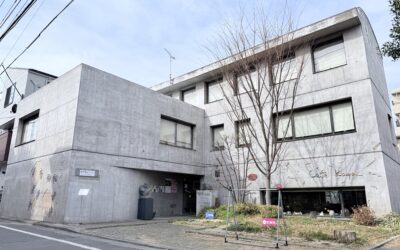
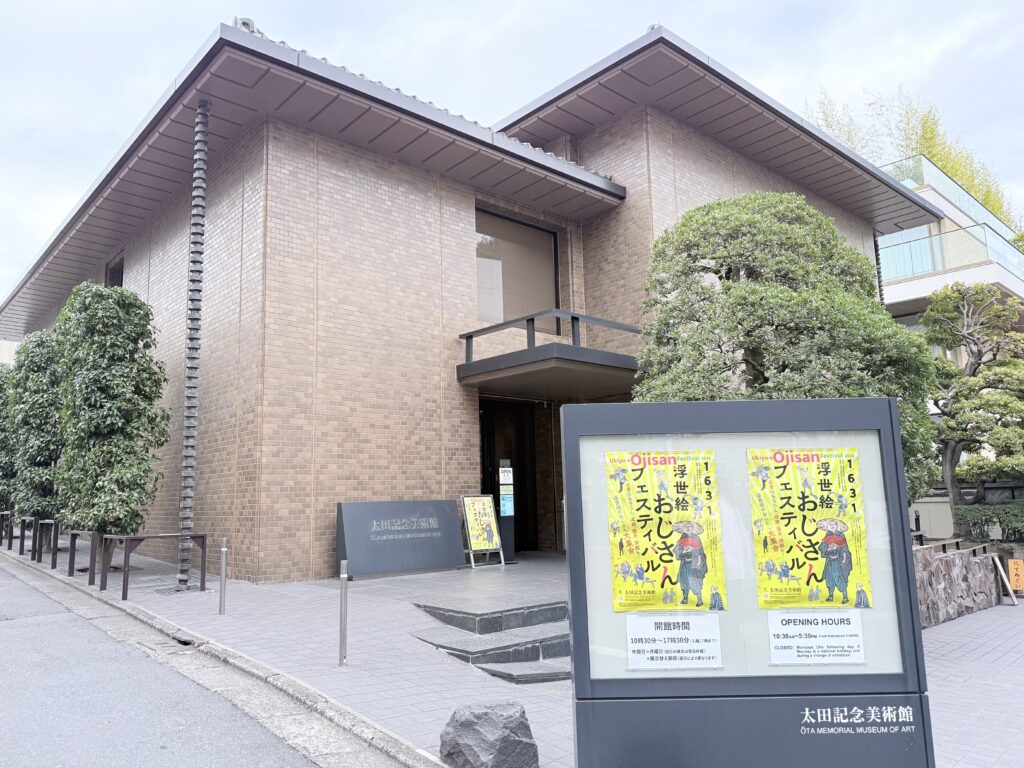
The Ota Memorial Museum of Art specializes in ukiyo-e, a uniquely Japanese art form that has received high international acclaim. Although it is located in the lively Harajuku area—an energetic district popular with tourists and young visitors—once inside, one finds a quiet space where it is possible to engage with the works in a calm and reflective atmosphere.
The museum was established in 1980 to make public the ukiyo-e collection assembled by the businessman Seizo Ota V. Concerned that many ukiyo-e prints had flowed overseas after the Meiji Restoration, Ota dedicated more than half a century to collecting them, amassing approximately 12,000 works. The collection has continued to grow, and today the museum holds around 15,000 pieces.
Because ukiyo-e prints are created using plant-based pigments and dyes, they are highly sensitive to light and air and are prone to fading. For this reason, the museum does not maintain a permanent exhibition. Instead, works are rotated roughly every month in accordance with the theme of each special exhibition. These carefully curated exhibitions allow visitors to appreciate both the artistic sophistication and the subtle charm that characterize ukiyo-e.
For those visiting Tokyo, this museum is well worth including in the itinerary. Please note that photography inside the museum is prohibited in order to protect the artworks.
What is UKIYO-E?
Ukiyo-e is a uniquely Japanese woodblock print art form that flourished during the Edo period (17th to 19th centuries). It depicted a wide range of subjects, including scenes from everyday urban life, images of women, kabuki actors, landscapes, and literary narratives, vividly reflecting the culture of the time.
Following the Meiji Restoration, ukiyo-e was introduced widely overseas and became one of the major sources of inspiration for Japonisme, the artistic movement that gained popularity in 19th-century Europe. It is well known for its significant influence on Impressionist and Post-Impressionist painters such as Vincent van Gogh, Claude Monet, and Paul Gauguin.
The dynamic landscape prints of Katsushika Hokusai and Utagawa Hiroshige, as well as the refined yet approachable portrayals of beautiful women by Kitagawa Utamaro, are particularly renowned worldwide. At the Ota Memorial Museum of Art, visitors can view works by these celebrated masters.
With a collection of approximately 15,000 ukiyo-e prints, the museum is a rare institution dedicated exclusively to this art form, not only in Japan but also on a global scale. Visitors can fully immerse themselves in the world of ukiyo-e, where Japan’s distinctive aesthetic sensibility is richly expressed.
Visitor Information
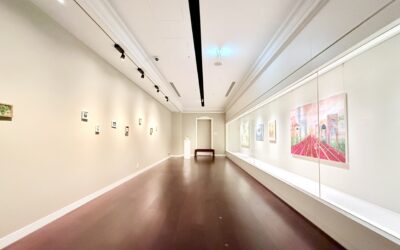
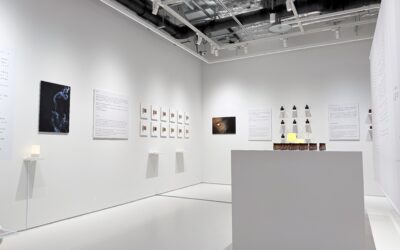
The museum’s exhibition spaces are divided between the first and second floors. Although the displayed works are rotated approximately every month, visitors can view more than 50 rare and valuable ukiyo-e prints at any given time.
To protect the artworks, lighting inside the galleries is kept subdued, allowing visitors to engage with the pieces in a quiet and contemplative environment.
While the themes of the special exhibitions vary widely, it is not uncommon for works by leading masters of ukiyo-e—such as Katsushika Hokusai, Utagawa Hiroshige, and Kitagawa Utamaro—to be featured.
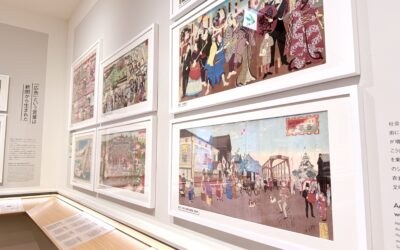
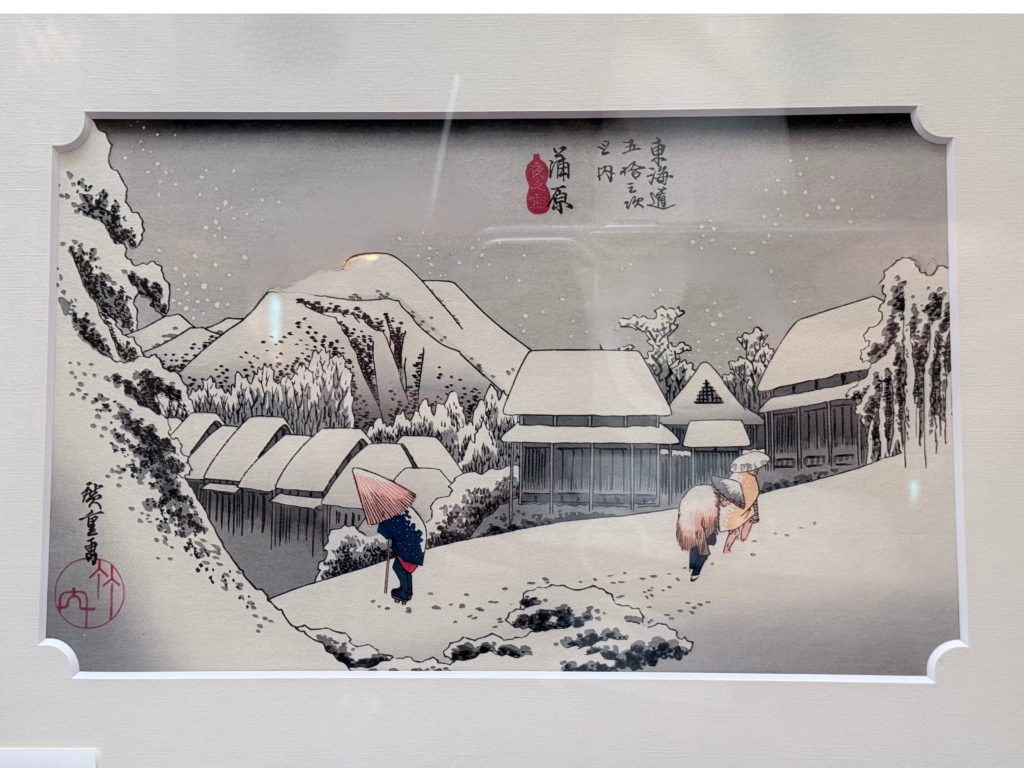
Please note that photography inside the museum is prohibited. In addition, the use of writing instruments is restricted in order to protect the display cases and artworks. The following photographs show reproductions of ukiyo-e prints.
Museum Shop
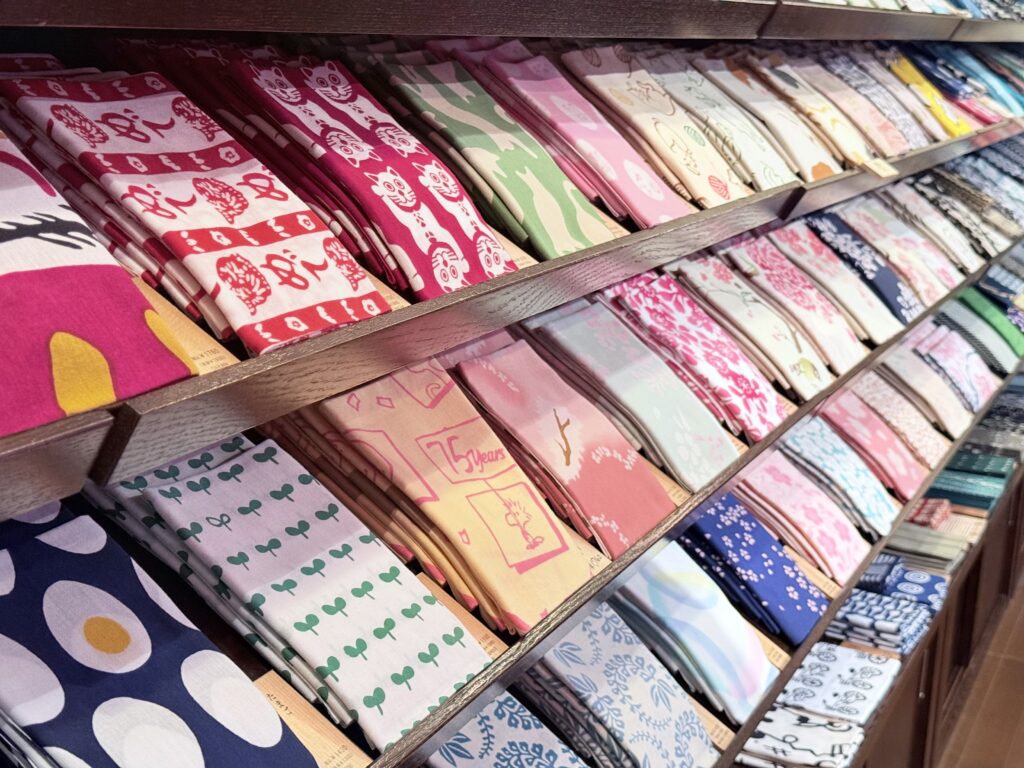
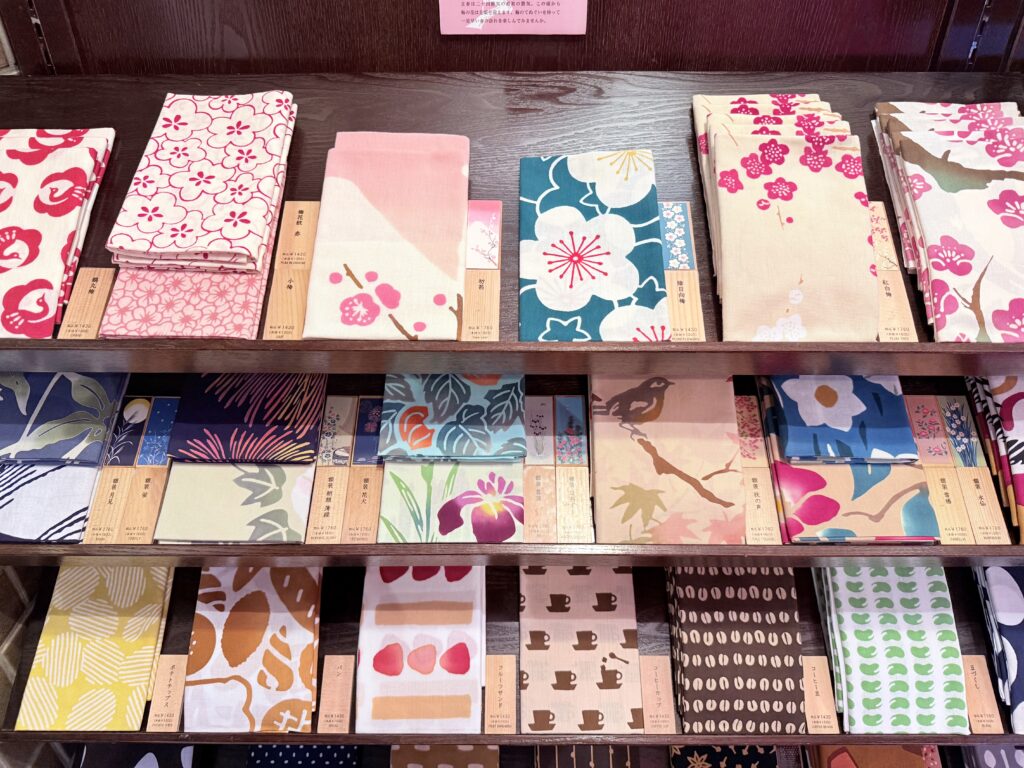
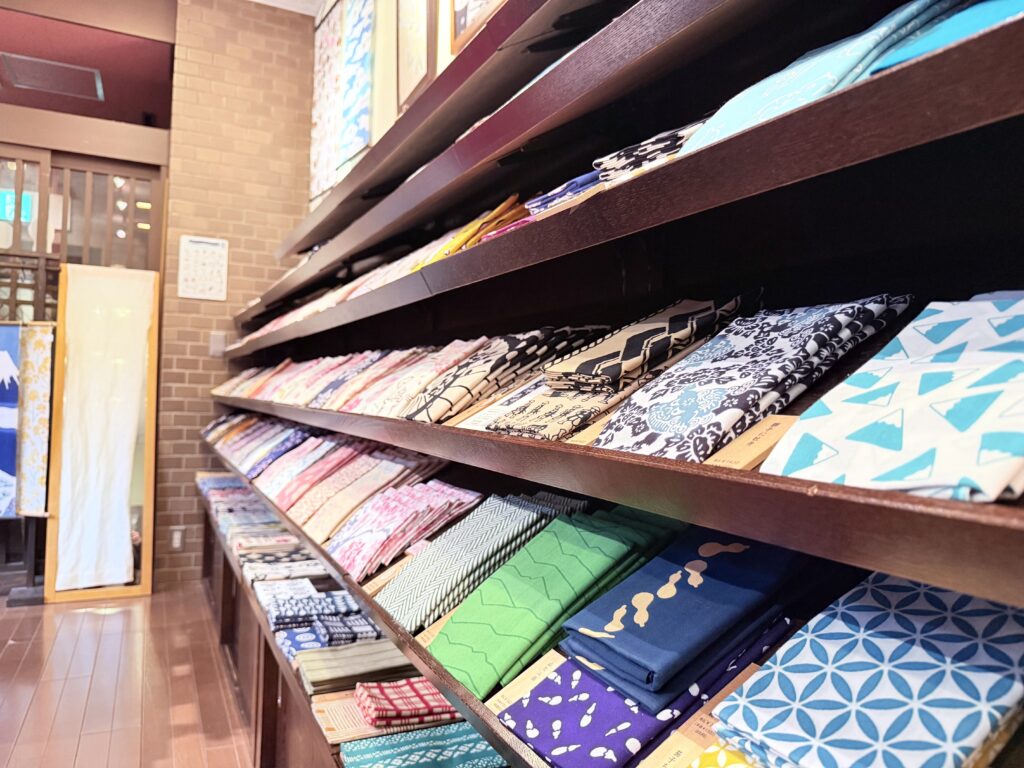
The museum shop, located on the basement level, offers approximately 200 varieties of tenugui. A tenugui is a traditional Japanese cotton cloth that has long been used in everyday life. While practical—similar to a towel or handkerchief—it also carries strong decorative appeal.
The shop features a wide range of designs, from pieces adorned with traditional motifs to modern patterns and charming, playful illustrations. Visitors can also purchase specialized display rods and fixtures designed to hang tenugui like tapestries.
After immersing oneself in the world of ukiyo-e, selecting a tenugui as a souvenir or memento of a trip to Japan offers a refined and culturally meaningful keepsake.
Around the Museum
The area surrounding the Ota Memorial Museum of Art extends into Harajuku and Omotesando, districts that symbolize Japan’s fashion and design culture.
Harajuku is widely known as a center of youth culture, where distinctive boutiques and streetwear brands line the main streets. At the same time, small galleries and carefully curated select shops can be found tucked away along the quieter backstreets, offering a more intimate creative atmosphere.
In contrast, Omotesando is characterized by its elegant boulevard, where flagship stores of global luxury brands stand alongside architecturally acclaimed commercial buildings. The district embodies a refined urban aesthetic, and with many structures regarded as masterpieces of modern and contemporary architecture, simply walking through the area becomes a design experience in itself.
After encountering the townspeople culture of the Edo period through ukiyo-e, strolling through this area—representing contemporary Japanese culture—allows visitors to experience more vividly the dynamic interplay between tradition and modernity that defines Tokyo.
Access